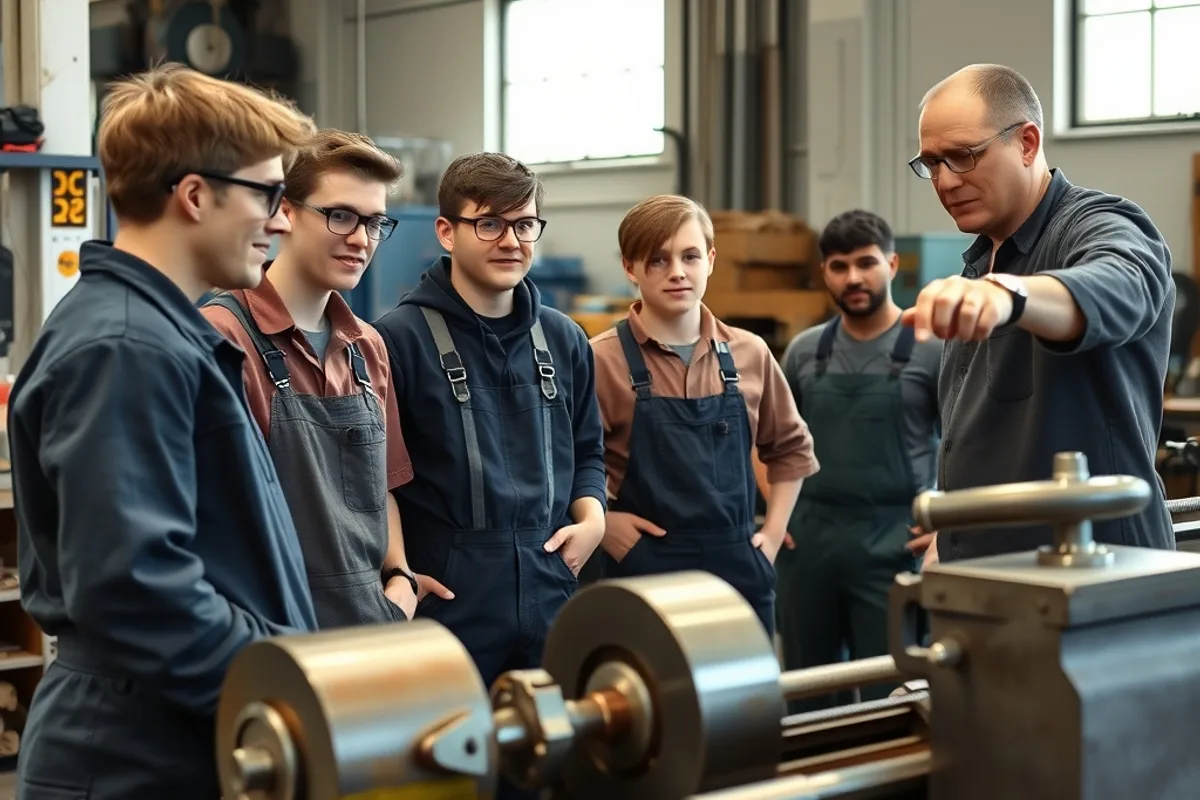
The workshop smells of oil and warm metal. Six young people in overalls are clustered around a lathe, watching an instructor make a cut. Most of them are nineteen or twenty. All of them are being paid, and all of them will finish with a qualification that employers are actively competing to hire.
For two decades, the dominant advice to young people was simple: go to university. Apprenticeships were treated as a fallback for those who could not get in. That hierarchy is now being challenged, not by policy alone, but by the job market itself.
Why employers changed their minds
The shortage is the immediate cause. Skilled trades — electricians, welders, machinists, technicians, care workers — are ageing out faster than they can be replaced. Universities produce far more graduates in media studies than the economy produces vacancies in media, while the reverse is true in engineering and construction.
Employers also discovered that a degree is an expensive proxy for qualities they can test directly. A young person who has spent three years in a workshop has demonstrated reliability, teamwork and practical judgement in a way that a transcript cannot.
And the apprentices themselves have done the arithmetic. A degree often means three years of fees and living costs. An apprenticeship means three years of earning, a qualification, and no debt. In a country where housing costs have risen faster than graduate salaries, that difference is decisive.
The new apprenticeship
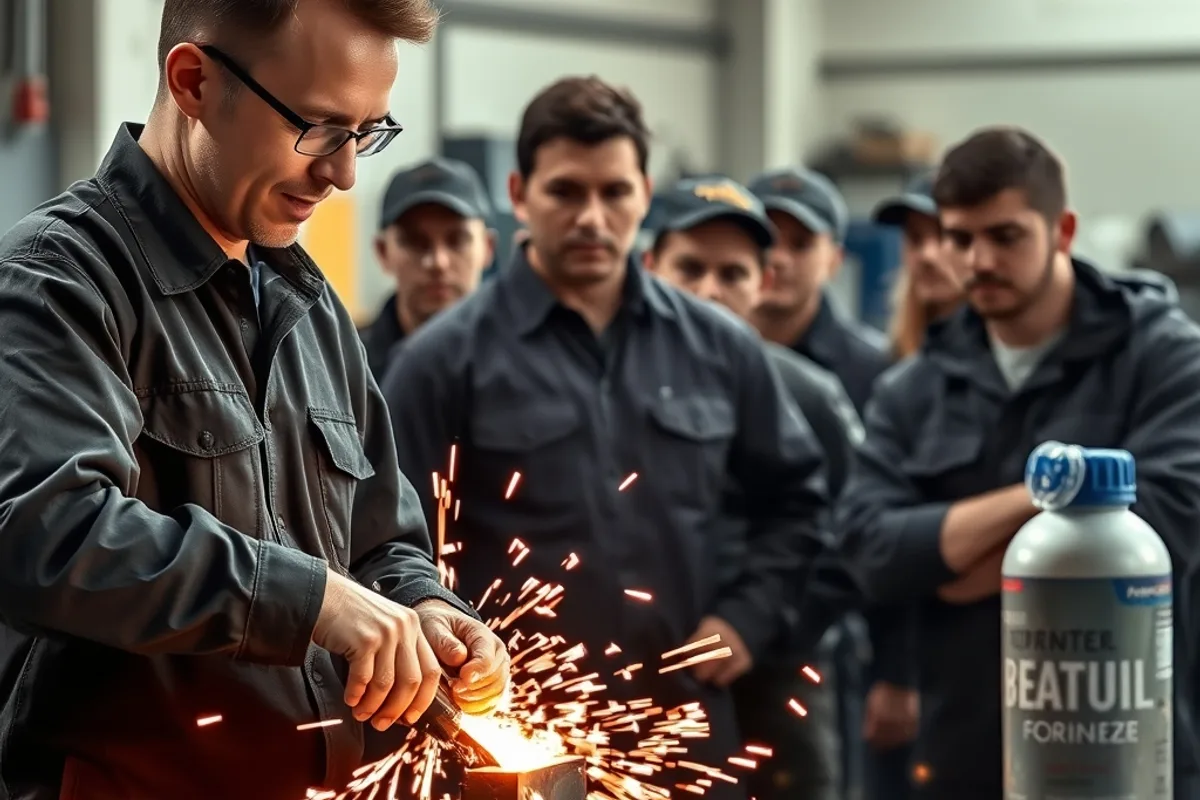
The modern version is not the same as the old one. The best programmes combine paid work with structured study, often one day a week at a college or online. They have mentors, clear progression routes and a job at the end. They are advertised openly rather than filled through family connections.
They also extend well beyond the trades. There are apprenticeships in software development, accounting, healthcare, logistics, hospitality and the creative industries. Some are excellent. Some are little more than cheap labour with a certificate attached. The difference is usually the quality of the training plan and the willingness of the employer to teach.
The strongest programmes share a feature: the apprentice is treated as a learner first and a worker second. That sounds inefficient. In practice, it produces people who can do the job independently much sooner.
Who gets in
There is a risk that apprenticeships reproduce the inequality they were meant to address. Places are often concentrated in regions with strong employers, and young people who cannot afford to move are excluded. Recruitment can rely on networks, which favours families who already know the trade.
Some employers are trying to change this by partnering with schools in disadvantaged areas, offering travel stipends, and removing unnecessary entry requirements. The results are encouraging but small relative to the scale of the gap.
There is also a gender problem. Many apprenticeships remain heavily segregated, with young men dominating construction and engineering and young women concentrated in care and administration. Changing that requires deliberate recruitment and visible role models, not just open applications.


The university question
None of this means university is a bad choice. For many careers — medicine, law, research, teaching — a degree remains essential. The problem was never university itself; it was the assumption that it was the only respectable route.
A healthier system would let people move between routes. A student who starts a degree and discovers that they learn better by doing should be able to transfer into an apprenticeship without losing two years. An apprentice who wants to become an engineer should be able to progress to a degree with credit for their practical work.
Some countries have built exactly this kind of ladder. Others are still treating vocational and academic education as separate tracks that never meet.

The measure of a good start
The workshop instructor stops the lathe and asks the group what went wrong with the cut. One of them answers correctly. He nods, resets the machine, and tells her to do the next one herself.
That is the whole model, really: a real task, a person who knows how to do it, and the time to get it wrong. It is expensive, slow and difficult to scale. It also works. The boom in apprenticeships is, at heart, a rediscovery of something the economy knew before it decided that a classroom was the only place to learn.